
Home / The Dirt / Hydroponic greens and vegetables / Growing Arugula Hydroponically
Growing Arugula Hydroponically
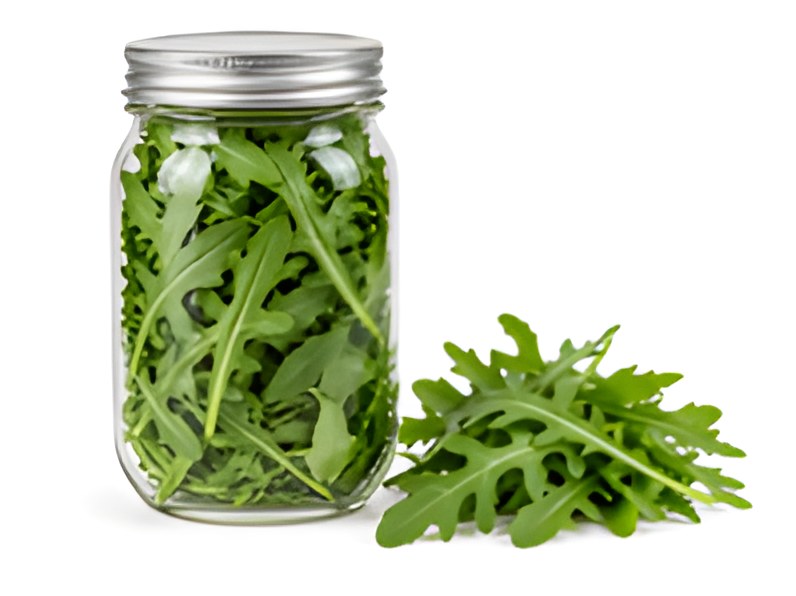
Arugula (Eruca sativa), also sold as rocket or salad rocket, is a cool-season leafy green with a spicy, nutty-peppery flavor (University of Wisconsin-Madison Extension). It grows fast, can be cut in as little as three to four weeks, and has a good body of hydroponic research behind it. Here's a brief overview of the plant, what is in it, and what the trials report.
What Arugula Is
Arugula belongs to the Brassicaceae, the mustard family, and is also listed as Eruca vesicaria ssp. sativa. It is native from the Mediterranean east to Turkey and northern India, where it grows on dry, disturbed ground. It has been grown since Roman times and became popular in the United States in the 1990s (University of Wisconsin-Madison Extension).
Young leaves are described as nutty-peppery, mustard-like or horseradish-like; older leaves are stronger and more bitter, and the flowers are milder than the leaves (University of Wisconsin-Madison Extension). Wild arugula (Diplotaxis tenuifolia) is a different plant, a hardy perennial with a similar flavor. Delaware Extension lists 'Rocket' at 35 days to harvest and 'Red Dragon' at 45-50 days (University of Delaware Cooperative Extension).
Nutritional Profile of Arugula
USDA FoodData Central lists raw arugula (FDC 169387, SR Legacy) per 100 g at 25 kcal, 91.7 g water, 2.58 g protein and 1.6 g fiber, with 160 mg calcium, 369 mg potassium, 109 µg vitamin K, 119 µg vitamin A (RAE), 15 mg vitamin C and 97 µg folate (DFE) (USDA FoodData Central, via GetFoodFacts).
Nothing on this page is health or medical advice.
Chemistry of Arugula
What Gives It Bite
Like other mustard-family greens, arugula gets its bite from glucosinolates. A study of a year of commercial rocket samples found glucosativin usually makes up the largest share; its breakdown product, sativin, is thought to carry the pungency. Glucoerucin went with green and peppery aromas. Leaves grown in warmer months had more glucosinolates and tasted more peppery, bitter and hot, and tasters liked them less. Repeat cuts also had more than first cuts, and first cuts were favored (Bell et al., 2020). The authors note these are correlations from commercial samples, not a controlled trial.
Our reading (not a tested rule): a cool room and the first cut give the mildest leaf; warm conditions and repeat cuts give a hotter one.
Nitrate in the Leaves
Rocket is a leafy green that builds up nitrate, and the trials below measured it. The Ohio State trial found leaf nitrate rose steeply as the feed got stronger, and leaves fed at EC 1.8 and 2.1 went over the 7,000 mg/kg fresh-weight winter limit the authors referenced, while EC 1.2 and 1.5 stayed under it (Yang et al., 2021). Two floating-raft trials found the same fix: switching the boards to plain water before harvest. In one floating system, ten days on tap water dropped leaf nitrate from 4,288-6,764 mg/kg to 52-634 mg/kg fresh weight (Jakše et al., 2013). In another, five days on water before harvest lowered nitrate and also raised yield (D'Anna et al., 2003).
Hydroponics of Arugula
What the Research Shows
The clearest feeding trial is from Ohio State's Wooster greenhouse. Arugula 'Standard' was grown in NFT channels at four feed strengths, EC 1.2, 1.5, 1.8 and 2.1 dS/m, with pH held near 5.8. Seedlings grew three weeks before transplant and four weeks after. EC 1.2 gave the smallest plants. At EC 1.5 and 1.8, shoot fresh weight was 136-139% higher, and glucosinolates were 24% and 41% higher; fresh weight tended to fall again at 2.1. The authors recommend EC 1.5 to 1.8 dS/m as the best balance of yield, quality and nitrate (Yang et al., 2021).
Other trials agree that more salt is not better. In a Brazilian deep-film trial on the Furlani solution, strengths above 67% of the standard recipe gave no significant gain in dry mass, and nothing above 100% justified the extra fertilizer; the authors put the best range at 67-100% strength (Guardabaxo et al., 2020). A floating-system crop grown March to April at EC 2.8 or 3.8 mS/cm adapted well, and the higher EC changed plant height not at all and yield only slightly (D'Anna et al., 2003). Another floating-system trial found the highest yield at 14 mM nitrogen and lower yields when 20 or 40 mM salt was added (Urlić et al., 2017).
Feeding and pH
The tested range is EC 1.5-1.8 dS/m in NFT at pH about 5.8 (Yang et al., 2021). Watch the pH: in University of Florida work reported by extension specialists, solutions with arugula sat at pH 7.0 while other crops sat at 5.7 to 6.0, and the authors suggest bringing a fresh solution to around pH 6 (Dickson & Fisher, Produce Grower). Our reading: start near EC 1.5 and pH 5.8-6, check pH more often than you would for lettuce, and give the plants a few days on plain water before a big harvest.
Temperature and Light
Arugula is a cool-season crop that tolerates frost. Long days, high temperatures or dry roots make it bolt, sending up a branched flower stalk 2 to 3 feet tall; light shade can slow bolting, and picking small leaves often helps (University of Wisconsin-Madison Extension). The Ohio State trial ran at about 18.5 °C by day and 16.8 °C by night, with a 16-hour day and a daily light integral near 17 mol/m²/day (Yang et al., 2021). In a hydroponic system the roots never dry out, so heat and day length are the main bolting triggers left to manage.
Starting a Plant
Seeds sprout within a few days even when cool (University of Wisconsin-Madison Extension). In one trial, plugs in small 20 ml cells of vermiculite or perlite gave 2.13 and 1.89 kg/m², and cell size made no significant difference to yield (Jakše et al., 2013). Ohio State grew seedlings three weeks before moving them into channels (Yang et al., 2021).
Size and Spacing
Thin plants to 3 to 6 inches apart for single heads, or sow thickly for cut-and-come-again picking (University of Wisconsin-Madison Extension). Ohio State ran 18 plants along each 4 m NFT channel, roughly 22 cm (about 9 inches) apart (Yang et al., 2021).
Harvest
Pick leaves once they are a couple of inches long, or cut the whole plant in as little as 3 to 4 weeks (University of Wisconsin-Madison Extension). Plug trays in the nitrate trial gave 2.02-2.21 kg/m² with weekly fertigation (Jakše et al., 2013). If you cut more than once, expect the regrowth to be hotter and more bitter than the first cut (Bell et al., 2020).
Pests
Flea beetles are the main pest on young plants (University of Wisconsin-Madison Extension). Delaware Extension also lists aphids, downy mildew, root rot and bacterial leaf spot (University of Delaware Cooperative Extension). Arugula reseeds readily if left to flower.
References
- Bell, L., Lignou, S., & Wagstaff, C. (2020). High glucosinolate content in rocket leaves (Diplotaxis tenuifolia and Eruca sativa) after multiple harvests is associated with increased bitterness, pungency, and reduced consumer liking. Foods, 9(12), 1799. Retrieved from https://www.mdpi.com/2304-8158/9/12/1799
- D'Anna, F., Miceli, A., & Vetrano, F. (2003). First results of floating system cultivation of Eruca sativa L. Acta Horticulturae, 609, 361-364. Retrieved from https://agris.fao.org/search/en/records/65de6bf2b766d82b18fd690e
- Dickson, R., & Fisher, P. Edible crop species differ in their pH effect in hydroponics. Produce Grower. Retrieved from https://producegrower.com/article/edible-crop-species-differ-in-their-ph-effect-in-hydroponics
- Guardabaxo, C. M. S., Assis, K. C. C., Figueiredo, F. C., & Silva, L. F. (2020). Rucula growing in a hydroponic system under different salt concentrations. Revista Brasileira de Engenharia de Biossistemas, 14(3), 274-282. Retrieved from https://seer.tupa.unesp.br/BIOENG/article/view/918
- Jakše, M., Hacin, J., & Kacjan Maršić, N. (2013). Production of rocket (Eruca sativa Mill.) on plug trays and on a floating system in relation to reduced nitrate content. Acta Agriculturae Slovenica, 101(1), 59-68. Retrieved from https://agris.fao.org/search/en/records/67598accc7a957febdfb9102
- Judd, R., & Hermenau, G. Arugula (Eruca sativa). University of Delaware Cooperative Extension, Grow Your Own. Retrieved from https://www.udel.edu/content/dam/udelImages/canr/pdfs/extension/environmental-stewardship/lawn-and-garden/UDExtension_GrowYourOwn_Arugula_Updated2021.pdf
- Mahr, S. Arugula, Eruca sativa. University of Wisconsin-Madison Division of Extension, Wisconsin Horticulture. Retrieved from https://hort.extension.wisc.edu/articles/arugula
- Urlić, B., Dumičić, G., Romić, M., & Goreta Ban, S. (2017). The effect of N and NaCl on growth, yield, and nitrate content of salad rocket (Eruca sativa Mill.). 40(18), 2611-2618. DOI 10.1080/01904167.2017.1381122. Retrieved from https://www.bib.irb.hr/904255
- USDA FoodData Central. Arugula, raw (FDC 169387, SR Legacy). Via GetFoodFacts. Retrieved from https://getfoodfacts.com/food/arugula-raw-169387
- Yang, T., Samarakoon, U., Altland, J., & Ling, P. (2021). Photosynthesis, biomass production, nutritional quality, and flavor-related phytochemical properties of hydroponic-grown arugula (Eruca sativa Mill.) 'Standard' under different electrical conductivities of nutrient solution. Agronomy, 11(7), 1340. Retrieved from https://www.mdpi.com/2073-4395/11/7/1340/htm
Keep reading

Growing Onions Hydroponically
In the scientific community, onion goes by the name of Allium cepa. Onion is more commonly known as a culinary and therapeutic spice in the kitchen when crushed into powdered form. The…

Growing Pepper Hydroponically
Pepper family is normally consumed as a spice. But, in some cultures, its fruit is used as whole foods. The family has well over 25 members, but this discussion is limited to…

Growing Celery Hydroponically
Celery belongs to the same family as one of the most common whole foods, carrots. From stalk to leaves, every part of celery is edible and often used as a spice for…