
Home / The Dirt / Hydroponic spices / Growing Garlic Hydroponically
Growing Garlic Hydroponically
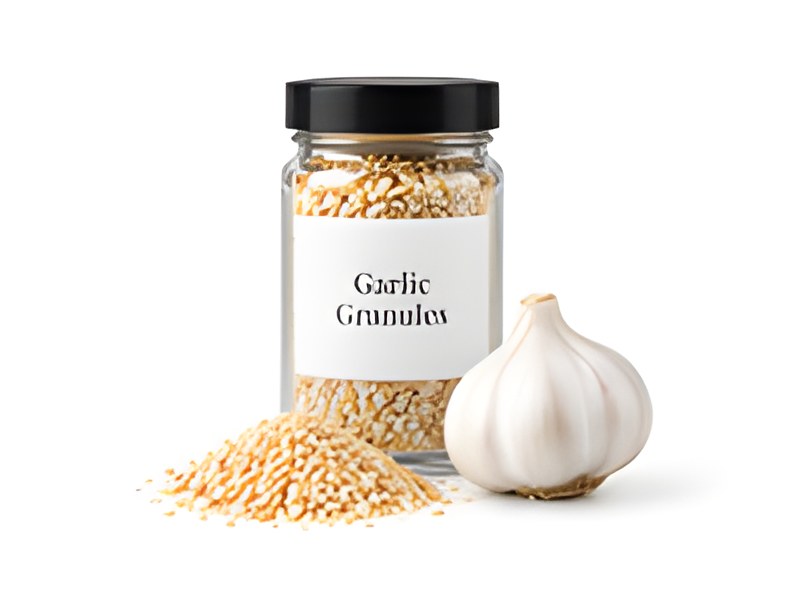
Garlic (Allium sativum) is one of the most used seasonings in the world, and one of the ten spices in our Oracle of Spice blend. Here's a brief overview of its nutrition, its chemistry, and what growers have learned about raising it without soil.
Nutritional Profile of Garlic
The figures below are for 100 grams of raw garlic, from the USDA's FoodData Central (SR Legacy record 169230). A clove weighs only a few grams, so a serving gives a small fraction of these amounts. (FoodData Central, 2026)
Carbohydrates and Fiber
Raw garlic is about 33 g carbohydrate per 100 g, with 2.1 g of dietary fiber. It is also more than half water (58.6 g).
Protein and Fat
It holds 6.4 g of protein and very little fat (0.5 g) per 100 g.
Minerals and Vitamins
Per 100 g, raw garlic lists 401 mg potassium, 181 mg calcium, 153 mg phosphorus, 1.7 mg iron and 1.67 mg manganese, along with 31.2 mg vitamin C, 1.24 mg vitamin B6 and 14.2 µg selenium.
Chemistry of Garlic
A whole, uncut clove smells fairly mild. The sharp smell appears when the clove is crushed or chopped. That is chemistry at work: allicin "is produced upon tissue damage from the non-proteinogenic amino acid alliin" in "a reaction that is catalyzed by the enzyme alliinase." (Borlinghaus et al., 2014)
In the kitchen this is why cooks often crush or mince garlic and let it rest a few minutes before it goes into the pan: the reaction needs the cell walls broken and a little time.
Researchers study allicin and the other sulfur compounds in garlic for many reasons. That research is ongoing, and nothing on this page is health or medical advice.
Hydroponics of Garlic
Garlic is grown from a clove rather than a seed. Each clove you plant grows into a new bulb.
Hydroponic System
Garlic has been grown in hydroponic culture in research settings. One Iranian study grew white and purple garlic genotypes in nutrient solution to test how alkalinity (sodium bicarbonate at 0, 10 and 20 mM) and the nitrogen source affect growth. (Horticultural Plants Nutrition, n.d.)
Nutrient Solution
In that study, shoot and root weights dropped as bicarbonate rose from 10 to 20 mM, and the authors found that "application of ammonium nitrate and ammonium sulfate sources decreased the negative effect of sodium bicarbonate." For a home grower the practical lesson is to watch the pH and alkalinity of your water, since hard, alkaline water can hold garlic back. (Horticultural Plants Nutrition, n.d.)
Greens First
Garlic takes months to form a full bulb, so many indoor growers harvest the green shoots (garlic greens) instead, which come much sooner and taste like a milder garlic.
Garlic rounds out the savory side of the Oracle of Spice blend, next to cumin and black pepper. Garlic and onion are close relatives in the same genus (Allium); see Growing Onions Hydroponically for the onion side of the family.
References
- FoodData Central. (2026, April 30). Garlic, raw (SR Legacy, FDC ID 169230). U.S. Department of Agriculture. Values as displayed at https://getfoodfacts.com/food/garlic-raw-169230
- Borlinghaus, J., Albrecht, F., Gruhlke, M. C. H., Nwachukwu, I. D., & Slusarenko, A. J. (2014). Allicin: Chemistry and Biological Properties. Molecules, 19(8), 12591-12618. doi:https://doi.org/10.3390/molecules190812591
- Horticultural Plants Nutrition. (n.d.). Evaluation of growth characteristics and changes in the concentration of macro and micro nutrients of garlic affected by alkalinity and nitrogen sources in hydroponic culture. Retrieved from https://hpn.shahed.ac.ir/article_963_en.html
Keep reading

Growing Chilli Hydroponically
Chilli is native to Latin America, particularly Mexico. Then came the age of exploration, and many cultivars of chilli spread across the globe. Now, chilli is a popular cooking ingredient to add…

Growing Nutmeg Hydroponically
Nutmeg’s walnut-like appearance is often deceiving. Unlike the dry fruit counterpart, nutmeg is a seed whose fruit is also a source of a couple more spices. Here’s a brief overview of nutmeg’s…

Growing Ginger Hydroponically
Ginger is much more than a culinary spice. For ages, its underground rhizome has been an integral part of eastern medicine. An overview of this folk remedy and one of the whole…