
Home / The Dirt / Hydroponic greens and vegetables / Growing Komatsuna Hydroponically
Growing Komatsuna Hydroponically
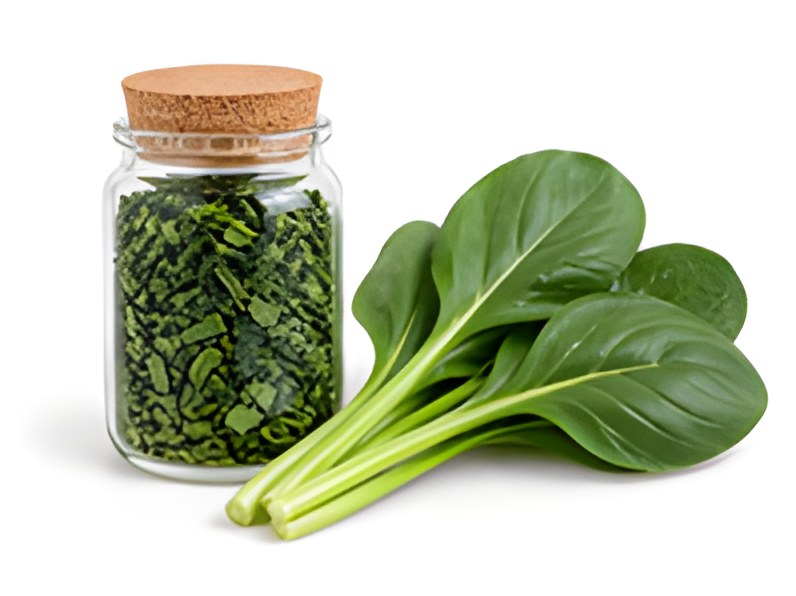
Komatsuna is a leafy green often sold as Japanese mustard spinach, though it is not a spinach at all: it belongs to the same species as the turnip (Seedy Farm). It grows quickly, it can be picked young or full size, and it has been grown in nutrient film and other hydroponic setups. Here's a brief overview of the plant and what the trials report.
What Komatsuna Is
Komatsuna is Brassica rapa var. perviridis, also written B. rapa var. komatsuna (Seedy Farm; Morning Chores). Morning Chores notes it has been grown in Japan since the 18th century and is now found in home gardens well beyond it (Morning Chores).
Several named varieties and hybrids are sold. Morning Chores lists 'Summerfest' for warm weather, 'Tora-san' as a quick-growing F1 hybrid, 'Red Leaf' for baby leaves, 'Tokyo Early' as slow to bolt, 'Sharaku' for big harvests, 'Green Boy' (a komatsuna and tatsoi cross) for cool weather, and 'Senposai' (a cabbage and komatsuna cross) (Morning Chores).
Nutritional Profile of Komatsuna
USDA's closest record is "Mustard spinach (tendergreen), raw" (FDC 168438, SR Legacy). The record does not name a species, so read these numbers as a guide to the green sold under that name rather than a lab test of komatsuna itself. Per 100 g raw, it lists 22 kcal, 92.2 g water, 2.2 g protein, 2.8 g fiber, 130 mg vitamin C, 495 µg vitamin A (RAE), 159 µg folate (DFE), 210 mg calcium, 449 mg potassium and 1.5 mg iron. The record does not report vitamin K (USDA FDC 168438, via GetFoodFacts).
Nothing on this page is health or medical advice.
Hydroponics of Komatsuna
What the Research Shows
A University of Arkansas horticulture thesis grew komatsuna in an NFT system at nutrient strengths from EC 1.0 to 1.8 mS/cm. The weakest solution (EC 1.0) gave the smallest plants on every measure. Shoot weight and height tended to rise from EC 1.0 to 1.2, but above 1.2 the leaves cupped more often and looked deformed. Leaf count did not differ between treatments (Malvar, 2014). The abstract gives no pH or yield figures.
Our reading: komatsuna is a light feeder in NFT. Start around EC 1.2 and back off if new leaves start to cup.
Nitrogen and Nitrate
Japanese researchers have looked at how to lower leaf nitrate in hydroponic komatsuna. A Saga University study compared a control solution (7.0 mM nitrate-N plus 1.0 mM ammonium-N) with half that nitrogen, and with urea in place of most of the nitrate. Halving the nitrogen cut leaf nitrate to 61% of the control; moving those plants to a nitrogen-free solution for about four days before harvest cut it to 23% (6.17 mg per gram of dry weight), and final dry weight was almost the same as the control. The urea solution lowered nitrate too but gave smaller plants (Mitsushio et al., 2005).
A later project by the same Saga University group added silicate to low-nitrate solutions. Low nitrate again gave less nitrate in the leaves, and the silicate eased the slower growth that the weak solution caused (Inoue, KAKENHI 17380025, 2005-2007). The project summary gives no concentrations.
Our reading: if you grow komatsuna to eat, a few days on a nitrogen-free solution before harvest, after growing on a reduced-nitrogen one, is a tested way to lower leaf nitrate without losing much weight.
Feeding and pH
We found no pH trial on komatsuna itself. A June 2026 Singapore Food Agency NFT trial on Asian leafy vegetables found choy sum grew best at pH 7.0, and xiao bai cai and gailan did equally well anywhere from 6.0 to 7.0, while lettuce did best at 6.0. The agency notes that the usual 5.5-6.5 range for leafy greens comes from temperate-climate research (Singapore Food Agency, 2026). Choy sum and xiao bai cai are relatives, not komatsuna. Our reading: start near pH 6.0-6.5 and don't chase a slow rise toward 7.
Light
In a hydroponic growth-room study at 20 °C, komatsuna was grown under red, blue, red-plus-blue and white fluorescent light at 300 µmol/m²/s for 12 hours a day. Red light gave more shoot dry weight than white, and blue or red-plus-blue light gave more vitamin C (ascorbic acid) in the leaves than white (Ohashi-Kaneko et al., 2007). The abstract does not give the amounts.
Temperature
Seeds germinate best at a soil temperature of 20-25 °C, and plants grow best at air temperatures of 15-25 °C (Seedy Farm). Seedy Farm describes it as tolerant of cold, heat and drought, says frost makes the leaves sweeter, and advises keeping a winter greenhouse above 5 °C until plants have at least four true leaves (Seedy Farm). Heat stress, or leaving plants past their best harvest time, can make them bolt (Seedy Farm).
Spacing
In soil, Seedy Farm thins to 5-10 cm for small plants and 12-18 cm for standard plants, or up to 30 cm for very large ones (Seedy Farm).
Harvest
Seedy Farm gives about 25-30 days in summer, 30-40 days in spring and 50-70 days in autumn, and says hydroponic crops take about 30 days; the best harvest height is 20-25 cm (Seedy Farm). Leaves can be picked at any stage, and the plant regrows where leaves are snipped, which gives a continuing harvest (Morning Chores).
Pests
Seedy Farm lists flea beetles, aphids, cabbage white caterpillars, leaf miners, and slugs or snails, and recommends fine mesh covers (0.8-1 mm) as the main defense (Seedy Farm).
References
- Inoue, K. (2005-2007). Improvement of tasty and nutrient enrichment of leaf vegetables grown hydroponically. KAKENHI project 17380025, Saga University. Retrieved from https://kaken.nii.ac.jp/grant/KAKENHI-PROJECT-17380025
- Malvar, L. P. (2014). Growth and biomass accumulation of komatsuna greens as affected by nutrient solution electrical conductivity. B.S. thesis, University of Arkansas, Fayetteville. Retrieved from https://scholarworks.uark.edu/hortuht/2
- Mitsushio, H., Nakahara, T., Someya, T., & Inoue, K. (2005). Effects of nitrogen forms and levels on the foliar nitrate-nitrogen contents of komatsuna in hydroponics. Bulletin of the Faculty of Agriculture, Saga University, 90, 23-30. Record retrieved from https://agris.fao.org/search/ar/records/647244ac53aa8c89630422ff
- Morning Chores. Growing komatsuna. Retrieved from https://morningchores.com/growing-komatsuna/
- Ohashi-Kaneko, K., Takase, M., Kon, N., Fujiwara, K., & Kurata, K. (2007). Effect of light quality on growth and vegetable quality in leaf lettuce, spinach and komatsuna. Environmental Control in Biology, 45(3), 189-198. DOI 10.2525/ecb.45.189. Retrieved from https://www.jstage.jst.go.jp/article/ecb/45/3/45_3_189/_article
- Seedy Farm. Komatsuna growing guide. Retrieved from https://seedy.farm/growing-guide/komatsuna/
- Singapore Food Agency (2026). Optimising pH for higher yields in hydroponic Asian leafy vegetables (best practice guide). Retrieved from https://www.sfa.gov.sg/docs/default-source/food-science-and-technology/optimizingphydroponicsasianleafyvegetables_bestpracticeguide_jun2026.pdf
- USDA FoodData Central. Mustard spinach, (tendergreen), raw. FDC ID 168438 (SR Legacy). Retrieved via https://getfoodfacts.com/food/mustard-spinach-tendergreen-raw-168438
Keep reading

Growing Onions Hydroponically
In the scientific community, onion goes by the name of Allium cepa. Onion is more commonly known as a culinary and therapeutic spice in the kitchen when crushed into powdered form. The…

Growing Pepper Hydroponically
Pepper family is normally consumed as a spice. But, in some cultures, its fruit is used as whole foods. The family has well over 25 members, but this discussion is limited to…

Growing Celery Hydroponically
Celery belongs to the same family as one of the most common whole foods, carrots. From stalk to leaves, every part of celery is edible and often used as a spice for…