
Home / The Dirt / Hydroponic herbs / Growing Lemon Balm Hydroponically
Growing Lemon Balm Hydroponically
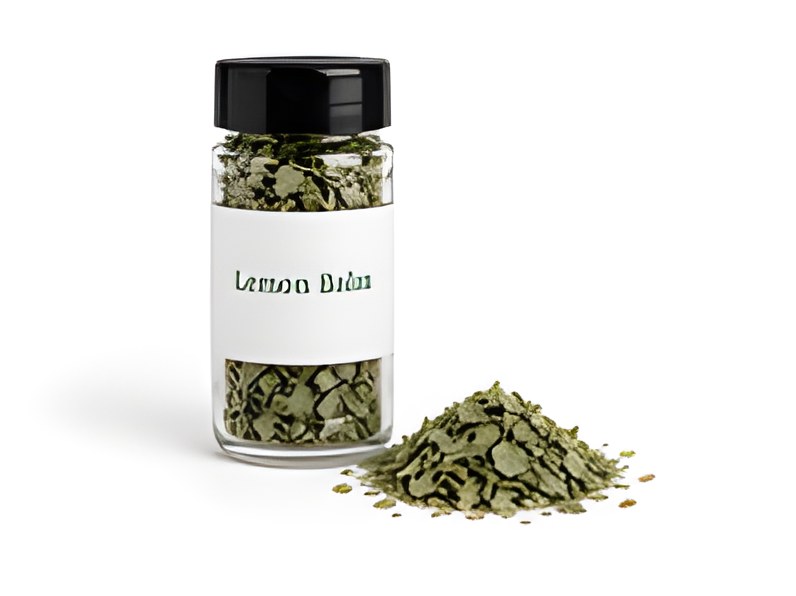
Lemon balm (Melissa officinalis) is a lemon-scented herb in the mint family. Here's a brief overview of the plant, the chemistry behind its smell, and what one research study found when it grew lemon balm in a hydroponic system.
What Lemon Balm Is
Lemon balm is a "several-stemmed perennial herb, 60-90 cm tall, lemon-scented when bruised" (PROSEA). Like other mint-family plants it has square, grooved stems, and its leaves grow in opposite pairs with scalloped edges. Its small flowers, white or pale violet, grow in clusters where the leaves meet the stem (PROSEA).
It is native from the eastern Mediterranean through the Caucasus and northern Iran to Central Asia, and it now grows wild in parts of Europe and the Americas (PROSEA).
In the kitchen, the leaves flavour salads, soups, vinegars and liqueurs, and they are brewed as a tea (PROSEA).
Nutrition
The USDA's FoodData Central has no record for fresh lemon balm, so we can't give the usual per-100-gram figures for this herb. Like most herbs, it is used a few leaves at a time.
Chemistry of Lemon Balm
The lemon smell comes from the leaf's essential oil, and there is very little of it. The PROSEA entry puts the oil in the leaves at "usually very low, 0.02-0.05%". A two-year field study measured 0.25-0.38%, depending on how closely the plants were spaced (Nurzyńska-Wierdak, Zawiślak & Papliński, 2023).
The main compounds in that oil are geranial and neral (the two together are known as citral), along with citronellal and geraniol (Ficai et al., 2022). Their share varies a great deal from sample to sample: the review lists leaf-oil ranges of about 6-51% geranial, 4-35% neral and 0.4-20% citronellal.
The leaves also contain rosmarinic acid, a phenolic compound that one extraction study found in the highest amount of any compound it measured (Ficai et al., 2022).
Nothing on this page is health or medical advice.
Hydroponics of Lemon Balm
Hydroponic System
Lemon balm has been grown in a deep-flow (DFT) hydroponic system, with beds about 10 cm deep, in an indoor greenhouse. The same study grew it in an aquaponic system, where fish waste feeds the plants, and compared the two (Heo et al., 2024).
Nutrient Solution
The hydroponic beds used a standard Yamazaki nutrient solution, which the paper gives an EC of 1.5 dS/m (Heo et al., 2024).
What the Study Found
Lemon balm grew more leaf in the aquaponic beds: the authors report that the leaf yield of basil and lemon balm in aquaponics was "60%–70% more than that in HS" (the hydroponic system). The aquaponic beds also had extra LED light, while the hydroponic beds had natural light only, so light is part of the difference. Between the two LED types they tried, "no significance was found" (Heo et al., 2024).
Harvesting
The field study found that cutting lemon balm twice in a season (mid-July and early September) gave more and better leaf than a single cut in September (Nurzyńska-Wierdak, Zawiślak & Papliński, 2023). Indoors, regular cutting of the leafy tops is the same idea.
Starting Plants
Lemon balm can be grown from seed or from cuttings (PROSEA).
References
- Jansen, P. C. M., & Brink, M. (n.d.). Melissa officinalis (PROSEA). PlantUse English. Retrieved from https://uses.plantnet-project.org/en/Melissa_officinalis_%28PROSEA%29
- Ficai, A., Petrisor, G., Motelica, L., Oprea, O., & Ficai, D. (2022). Melissa officinalis. Encyclopedia (MDPI). Retrieved from https://encyclopedia.pub/entry/21335 (adapted from Int. J. Mol. Sci. 23(7), 3591, doi:https://doi.org/10.3390/ijms23073591)
- Nurzyńska-Wierdak, R., Zawiślak, G., & Papliński, R. (2023). Agronomic Practices in Lemon Balm Production under Temperate Climate Conditions: Raw Material Yield and Active Substances Content. Agronomy, 13(5), 1433. doi:https://doi.org/10.3390/agronomy13051433
- Heo, J., Baek, J., Subah, Z., & Ryu, J. H. (2024). Evaluating crop growth between hydroponics and aquaponics with different light inputs. Frontiers in Horticulture, 3, 1413224. doi:https://doi.org/10.3389/fhort.2024.1413224
Keep reading

Growing Basil Hydroponically
Basil is essentially a herb. But it’s frequently used as a spice in kitchens because of its aroma and peppery taste. Basil is an essential ingredient in Italian and Indian culinary preparations…

Growing Parsley Hydroponically
Native to the eastern Mediterranean region, parsley is now widely used in European and American cuisine. Its leaves are either utilized fresh or dried to form spice. Sometimes, it’s partnered up with…

Growing Thyme Hydroponically
Thyme is a perennial herb that’s rich in nutrition as well as taste. And both these qualities are responsible for their culinary and medicinal uses. Here’s a brief overview of their chemistry…