
Home / The Dirt / Hydroponic herbs / Growing Lemon Verbena Hydroponically
Growing Lemon Verbena Hydroponically
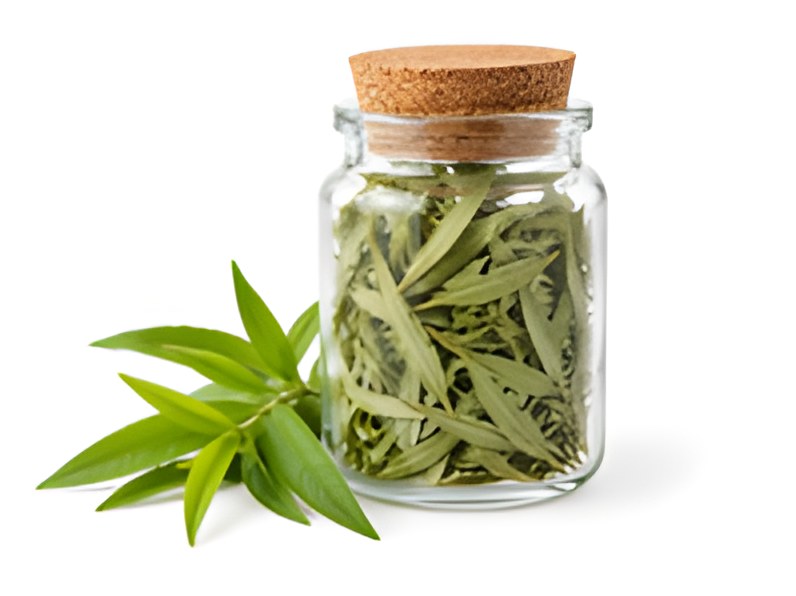
Lemon verbena is the herb people grow for scent: brush the leaves and the whole room smells of lemon peel. It is a woody shrub rather than a soft herb, it hates frost, and it drops its leaves when the room gets cold. Here's a brief overview of the plant and what the research reports.
What Lemon Verbena Is
Lemon verbena, Aloysia citrodora, is in the verbena family (Verbenaceae). The RHS lists its older names as Aloysia citriodora, Aloysia triphylla, Lippia citriodora and Lippia triphylla, so you will see all of them on seed packets and in papers. It is native to South America and grows as a deciduous sub-shrub up to 1.5 to 2.5 m tall and wide (RHS, Aloysia citrodora). The Old Farmer's Almanac and Drugs.com both name Argentina and Chile as its home (The Old Farmer's Almanac, Lemon Verbena; Drugs.com, Lemon Verbena). The leaves are narrow and lemon-scented, and it bears small white flowers in sprays at the stem tips (Drugs.com, Lemon Verbena).
University of Illinois Extension lists it as a tender perennial that is frost sensitive, so it is usually grown in containers that come indoors for winter. The leaves flavor drinks, salads, jellies, sauces, soups, fish and meat, and can stand in for lemon in recipes (University of Illinois Extension, Lemon Verbena).
Nutritional Profile of Lemon Verbena
We found no USDA nutrient record for lemon verbena; a search of USDA-based listings returned only lemons. What the leaf does carry is a small amount of essential oil. Drugs.com puts it at 0.42% to 0.65%, with neral, limonene and geraniol as the main parts (Drugs.com, Lemon Verbena). In a study from Turkish universities of plants cut before, at and after flowering, the oil at full flowering held 31.15% limonene, 11.92% neral and 15.53% geranial, and those three made up 46% to 59% of the oil across all three cuts (Kizil et al., 2018).
Cautions: Drugs.com lists lemon verbena as GRAS (generally recognized as safe) as a flavoring, but advises avoiding it in pregnancy and breastfeeding because safety information is lacking, notes it is cleared by the kidneys, and says related species have caused contact skin reactions (Drugs.com, Lemon Verbena). Nothing on this page is health or medical advice.
Hydroponics of Lemon Verbena
What the Research Shows
EC in a nutrient-solution trial. Researchers at the University of Tabriz, Iran, grew lemon verbena and peppermint in a glasshouse in bags of 1:1 perlite and vermiculite, fed with half-strength Hoagland's solution adjusted to EC 0.7, 1.4, 2.8 or 5.6 dS/m, plus a fifth treatment of half-strength Hoagland's with 45 mM salt (also 5.6 dS/m). Days ran about 28 °C and nights about 20 °C under natural light. Lemon verbena was heaviest at EC 1.4 (480 g fresh, 132 g dry per plant) and nearly as good at 2.8 (442 g fresh, 125 g dry). At 0.7 it made 401 g fresh, and at 5.6 it fell to 300 g, or 262 g with salt. Leaf area grew up to 2.8 and dropped at 5.6, and oil content per plant fell as EC rose, mostly because the plants got smaller. The authors suggest EC 1.4 to 2.8 dS/m for both crops (Tabatabaie & Nazari, 2007). The paper does not report pH.
Leaf nutrient targets. A research team ran 13 field and pot fertilizer trials in northeastern Portugal from 2013 to 2015, covering 46 cuts. Nitrogen usually raised dry-matter yield; phosphorus and potassium did not, and boron helped only in one year. They proposed leaf sufficiency ranges of N 28-43, P 0.9-3.8, K 10-28, Ca 7.5-30 and Mg 2-8 g/kg, and found adequate plants read 40 to 45 on a SPAD chlorophyll meter. Each tonne of harvested top growth removed about 31 kg N, 25 kg K and 17 kg Ca (Afonso, Arrobas, Ferreira & Rodrigues, 2018). These were soil trials, not hydroponic, but they show the plant is a nitrogen-hungry leaf crop.
Our reading: no study we found grew lemon verbena in a true recirculating hydroponic system. The one nutrient-solution trial points to EC 1.4 to 2.8, with the low end giving the most weight, and the Portuguese work says nitrogen matters most. Illinois Extension also calls it a heavy feeder and suggests liquid feed about every two weeks for potted plants (University of Illinois Extension, Lemon Verbena). A drip or ebb-and-flow system with a perlite-type medium, like the trial used, suits a woody shrub better than a raft.
Starting Plants
Lemon verbena is grown from cuttings. Illinois Extension says tip cuttings root easily and grow fast, and suggests replacing older plants with new ones from cuttings because young plants have better leaves (University of Illinois Extension, Lemon Verbena). The RHS lists softwood cuttings as the way to propagate it (RHS, Aloysia citrodora). In the Iranian trial, 7.5 to 10 cm shoot tips were rooted under mist in 1:1 perlite and sand with bottom heat at 21 to 24 °C (Tabatabaie & Nazari, 2007).
Light and Temperature
The Almanac asks for at least 6 to 8 hours of sun a day and says the plant is perennial outdoors only in USDA zones 8 to 11. Below 40 °F (about 4 °C) it drops its leaves and goes dormant, and potted plants rarely pass 2 feet tall (The Old Farmer's Almanac, Lemon Verbena). The RHS rates it H3, hardy only to about -5 to 1 °C in mild parts of the UK, and wants full sun in a sheltered spot (RHS, Aloysia citrodora). Indoors, Illinois Extension says to keep it in a bright spot and cut back the feed over winter (University of Illinois Extension, Lemon Verbena).
Harvest
The Almanac suggests starting to pick once plants are about 10 inches tall (The Old Farmer's Almanac, Lemon Verbena). Illinois Extension says to harvest leaves as needed through the season and to prune or pick often to keep a good shape (University of Illinois Extension, Lemon Verbena). If you grow it for the dried leaf, the Turkish trial found full flowering gave the most fresh and dry leaf per plant of the three cutting times it tested (Kizil et al., 2018).
Pests
The RHS says lemon verbena is generally free of pests and diseases outdoors (RHS, Aloysia citrodora). Indoors, the Almanac warns of whiteflies and spider mites on plants stressed by low light or the wrong humidity (The Old Farmer's Almanac, Lemon Verbena).
Storage
Leaves can be used fresh or dried and kept in sealed containers (University of Illinois Extension, Lemon Verbena). The Almanac adds that fresh leaves keep in the fridge (The Old Farmer's Almanac, Lemon Verbena).
References
- Afonso, S., Arrobas, M., Ferreira, I. Q., & Rodrigues, M. A. (2018). Leaf nutrient concentration standards for lemon verbena (Aloysia citrodora Paláu) obtained from field and pot fertilization experiments. Journal of Applied Research on Medicinal and Aromatic Plants, 8, 33-40. DOI 10.1016/j.jarmap.2017.09.004. Retrieved from https://bibliotecadigital.ipb.pt/entities/publication/42671973-5437-4d9e-8eed-625227a6f080/full
- Drugs.com. Lemon Verbena (natural product information). Retrieved from https://www.drugs.com/npp/lemon-verbena.html
- Kizil, S., Dinc, H., Diraz, E., Kizil, M., & Karaman, S. (2018). Effects of Different Harvest Periods on Essential Oil Components of Lippia citriodora Kunth Under Semi-Arid Climatic Conditions and Biological Activities of Its Essential Oil. Acta Scientiarum Polonorum Hortorum Cultus, 17(2), 39-48. DOI 10.24326/asphc.2018.2.4. Retrieved from https://czasopisma.up.lublin.pl/asphc/article/view/388
- RHS. Aloysia citrodora (lemon verbena). Royal Horticultural Society. Retrieved from https://www.rhs.org.uk/plants/284648/wd/details
- Tabatabaie, S. J., & Nazari, J. (2007). Influence of Nutrient Concentrations and NaCl Salinity on the Growth, Photosynthesis, and Essential Oil Content of Peppermint and Lemon Verbena. Turkish Journal of Agriculture and Forestry, 31(4), 245-253. Retrieved from https://journals.tubitak.gov.tr/agriculture/vol31/iss4/4
- The Old Farmer's Almanac. Lemon Verbena. Retrieved from https://www.almanac.com/plant/lemon-verbena
- University of Illinois Extension. Lemon Verbena. Retrieved from https://extension.illinois.edu/herbs/lemon-verbena
Keep reading

Growing Basil Hydroponically
Basil is essentially a herb. But it’s frequently used as a spice in kitchens because of its aroma and peppery taste. Basil is an essential ingredient in Italian and Indian culinary preparations…

Growing Parsley Hydroponically
Native to the eastern Mediterranean region, parsley is now widely used in European and American cuisine. Its leaves are either utilized fresh or dried to form spice. Sometimes, it’s partnered up with…

Growing Thyme Hydroponically
Thyme is a perennial herb that’s rich in nutrition as well as taste. And both these qualities are responsible for their culinary and medicinal uses. Here’s a brief overview of their chemistry…