
Home / The Dirt / Hydroponic greens and vegetables / Growing Lettuce Hydroponically
Growing Lettuce Hydroponically
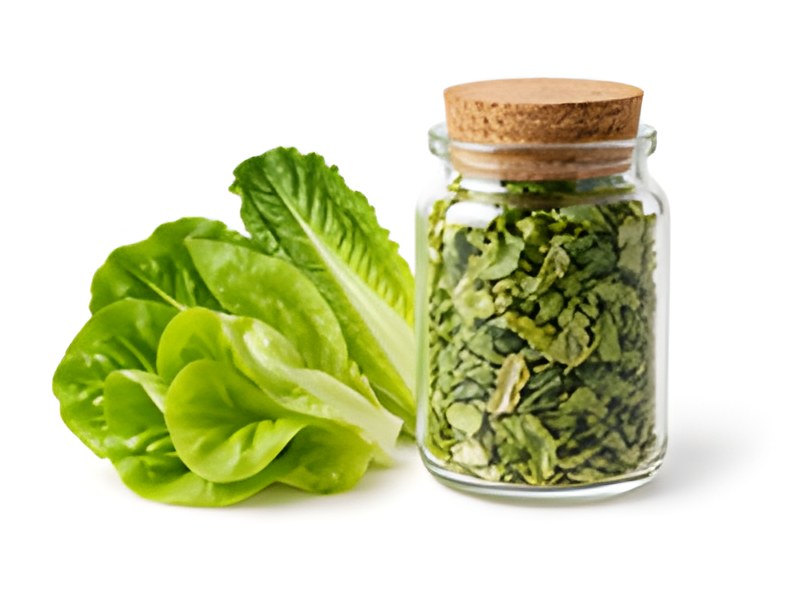
Lettuce is the crop most people start hydroponics with, and for good reason: it grows fast, stays compact and does well in a cool room. It does have two habits to manage. Heat and long days make it bolt, and fast growth can burn the leaf edges. Here's a brief overview of the plant and what the trials report.
What Lettuce Is
Lettuce, Lactuca sativa, is in the daisy family. Newfoundland and Labrador's crop guide says it was reportedly domesticated in ancient Egypt from prickly lettuce and was bred over time into four types: romaine, crisphead, butterhead and loose leaf (Government of Newfoundland and Labrador, Crop Guidelines: Lettuce). The University of Arkansas home-garden sheet lists a fifth, stem lettuce (also called asparagus lettuce or celtuce), and notes that leaf lettuce is the easiest to grow there while crisphead needs the most care (Andersen, University of Arkansas FSA6011).
Nutritional Profile of Lettuce
USDA's SR Legacy record for raw green leaf lettuce (FDC 169249, via GetFoodFacts) lists, per 100 g, about 15 kcal, 95 g water, 1.36 g protein, 1.3 g fiber, 9.2 mg vitamin C, 126 µg vitamin K, 370 µg vitamin A (RAE), 38 µg folate, 194 mg potassium, 36 mg calcium, 13 mg magnesium, 0.86 mg iron and 28 mg sodium (GetFoodFacts, USDA FDC 169249). Nothing on this page is health or medical advice.
Hydroponics of Lettuce
What the Research Shows
EC, pH and tipburn in NFT. Ohio State University and USDA-ARS researchers in Wooster, Ohio grew three Salanova lettuces ('Green Butter', 'Red Butter' and 'Red Oakleaf') in a nutrient-film (NFT) greenhouse system. The greenhouse averaged about 24 °C, with supplemental high-pressure sodium light and a daily light integral of about 12 mol/m²/day. In the first trial, EC was set at 1.4, 1.6, 1.8 or 2.0 mS/cm at pH 5.8. 'Green Butter' (263 g per head) and 'Red Butter' (202 g) were heaviest at EC 1.8 or above, and 'Red Oakleaf' (183 g) at 1.6 or above; 'Green Butter' lost 75 g per head at 1.4 compared with 1.8. The catch was tipburn, which rose from a rating of 1.2 at EC 1.4 to 2.7 at EC 1.8. In the second trial, at EC 1.8, pH 6.0 and 6.2 gave the most yield, with 'Green Butter' averaging 320 g per head, and pH did not change tipburn. In the third, spraying the leaves with calcium chloride twice a week cut tipburn from 2.5 to 0.75, with 400 and 800 mg/L of calcium giving the best control, but it also lowered head weight by about 25 to 30 g (Samarakoon, Palmer, Ling & Altland, 2020).
Season matters more than the recipe. Mississippi State researcher Casey Barickman worked with a commercial hydroponic greenhouse in Flora, Mississippi, testing three nutrient EC levels for green- and red-leaf lettuce in deep-water culture. Season and cultivar affected yield and quality more than the EC treatment did. The recommendation was to raise EC in winter and spring, when cold, cloudy weather limits nutrient uptake, and lower it in summer to avoid a salt buildup that damages leaves. The farm, which uses no supplemental lighting, reported a 70% yield increase in the year after adopting the changes (Vollin, MAFES, 2020).
General ranges. Oklahoma State's hydroponic guide lists lettuce at EC 1.2 to 1.8 mS/cm and pH 6.0 to 7.0, and gives 72 to 75 °F as the optimal water temperature for hydroponic solutions in general (Dunn & Singh, OSU HLA-6722).
Our reading: the Ohio trial and the Oklahoma State table agree on EC 1.2-1.8 and pH about 6.0-6.2. Pushing EC toward the top of that range adds weight but also tipburn, so if you see brown leaf edges, back the EC off a little, keep air moving, and choose cultivars known to resist it.
Tipburn
Arkansas's guide describes tipburn as a calcium shortage in the fast-growing edge tissue of the leaf, which makes the margins die back (Andersen, University of Arkansas FSA6011). In hydroponics the Ohio results above show the trade-off directly: the stronger solution that grew bigger heads also raised tipburn (Samarakoon et al., 2020).
Temperature and Bolting
Newfoundland's guide calls lettuce a cool-season crop with maximum growth at 15 to 18 °C. Seed germinates as low as 5 °C, best at 16 to 20 °C, and germination is inhibited above 20 °C. Several days above 30 °C will make the plants bolt, and bolted leaves turn bitter (Government of Newfoundland and Labrador, Crop Guidelines: Lettuce). Arkansas puts the best mean daily temperature at 60 to 70 °F and says bolting comes from a combination of long days, warm temperatures and plant age (Andersen, University of Arkansas FSA6011).
Cultivar choice makes a big difference. In a field trial at Iowa State's Horticulture Research Station, 17 lettuces were transplanted in June 2021 and 2022; June 2022 averaged 29 °C. That hot year, 'Aerostar' romaine bolted 10%, 'Green Batavia' and 'Magenta' 15%, while 'Cegolaine', 'Adriana', Salanova 'Green Butter' and 'Red Oakleaf' bolted 100% (Nair, Perry & Beebout, Practical Farmers of Iowa, 2023). That was a summer field trial, not hydroponics, but if your grow room runs warm it is a useful list of cultivars to try first.
Spacing
For garden rows, Arkansas thins leaf lettuce to 4 inches apart and romaine or butterhead to 6 to 8 inches (Andersen, University of Arkansas FSA6011). Newfoundland's field spacing is wider: about 20 to 22 cm in the row for loose-leaf and butterhead, and 30 to 38 cm for romaine and crisphead (Government of Newfoundland and Labrador, Crop Guidelines: Lettuce). In an NFT channel, give butterheads and romaines their full head width so leaves don't touch and hold moisture.
Harvest
Arkansas lists 40 to 80 days from seed depending on type: about 45 days for 'Grand Rapids', 50 for 'Black Seeded Simpson', 60 for 'Bibb', 'Parris Island' and 'Little Gem', and 65 for 'Buttercrunch'. Harvest at once when a seedstalk appears (Andersen, University of Arkansas FSA6011). Newfoundland's guide warns that a late harvest of a mature crop can ruin the whole planting (Government of Newfoundland and Labrador, Crop Guidelines: Lettuce).
Pests and Disease
Newfoundland's guide lists root rot and damping off (Rhizoctonia, Fusarium, Pythium), gray mold (Botrytis) in cool humid air, bacterial head rot, and slugs. It advises sterilized trays and media, good airflow and proper spacing (Government of Newfoundland and Labrador, Crop Guidelines: Lettuce). Arkansas adds aphids and root aphids (Andersen, University of Arkansas FSA6011).
Storage
Commercially, lettuce is cooled quickly to about 1 °C and held at 0 °C and 98-100% relative humidity, where it stays marketable for two to three weeks depending on type (Government of Newfoundland and Labrador, Crop Guidelines: Lettuce). At home, Arkansas suggests washing, drip-drying and bagging it in the refrigerator; leaf and Bibb types keep up to four weeks if the leaves are dry when bagged. Canning and freezing are not recommended (Andersen, University of Arkansas FSA6011).
References
- Andersen, C. R. Lettuce. Home Gardening Series, FSA6011. University of Arkansas Division of Agriculture. Retrieved from https://www.uaex.uada.edu/publications/pdf/FSA-6011.pdf
- Dunn, B., & Singh, H. (2017). Electrical Conductivity and pH Guide for Hydroponics. HLA-6722. Oklahoma State University Extension. Retrieved from https://extension.okstate.edu/fact-sheets/electrical-conductivity-and-ph-guide-for-hydroponics
- GetFoodFacts. Lettuce, green leaf, raw (USDA FoodData Central SR Legacy, FDC 169249). Retrieved from https://getfoodfacts.com/food/lettuce-green-leaf-raw-169249
- Government of Newfoundland and Labrador. Crop Guidelines: Lettuce (Field). Crop Production Guide. Retrieved from https://www.gov.nl.ca/ffa/files/Lettuce.pdf
- Nair, A., Perry, R., & Beebout, J. (2023). Slow Your Bolt (lettuce cultivar trial, Iowa State University Horticulture Research Station, 2021-2022). Practical Farmers of Iowa. Retrieved from https://practicalfarmers.org/wp-content/uploads/2023/02/Slow-Your-Bolt-Nair-Perry-Beebout-2023-PFI-AC.pdf
- Samarakoon, U., Palmer, J., Ling, P., & Altland, J. (2020). Effects of Electrical Conductivity, pH, and Foliar Application of Calcium Chloride on Yield and Tipburn of Lactuca sativa Grown Using the Nutrient-Film Technique. HortScience, 55(8), 1265-1271. DOI 10.21273/HORTSCI15070-20. Retrieved from https://ars.usda.gov/ARSUserFiles/50820500/GPRG/2020PublicationsandSummaries/2020_Effects%20of%20Electrical%20Conductivity,%20pH,%20and%20Foliar%20Application%20of%20Calcium%20Chloride%20on%20Yield%20and%20Tipburn%20of%20Lactuca%20sativa%20Grown%20Using%20the%20Nutrient%E2%80%93Film%20Technique.pdf
- Vollin, T. (2020, Winter). Head Strong. Mississippi Agricultural and Forestry Experiment Station (MAFES), Mississippi State University. Retrieved from https://www.mafes.msstate.edu/discovers/article.php?id=199
Keep reading

Growing Onions Hydroponically
In the scientific community, onion goes by the name of Allium cepa. Onion is more commonly known as a culinary and therapeutic spice in the kitchen when crushed into powdered form. The…

Growing Pepper Hydroponically
Pepper family is normally consumed as a spice. But, in some cultures, its fruit is used as whole foods. The family has well over 25 members, but this discussion is limited to…

Growing Celery Hydroponically
Celery belongs to the same family as one of the most common whole foods, carrots. From stalk to leaves, every part of celery is edible and often used as a spice for…