
Home / The Dirt / Hydroponic herbs / Growing Sorrel Hydroponically
Growing Sorrel Hydroponically
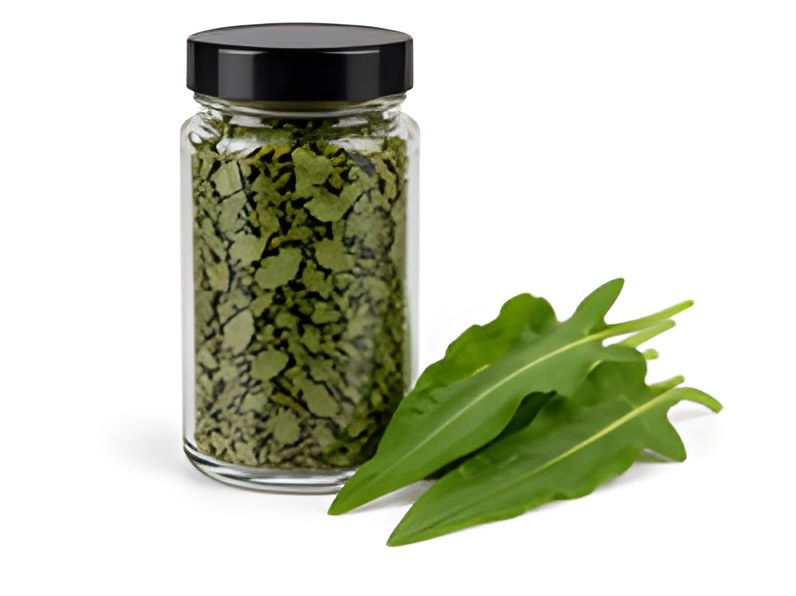
Garden sorrel (Rumex acetosa) is a perennial leaf crop in the dock and buckwheat family, grown for its sour, lemony leaves. Its smaller cousin French sorrel (Rumex scutatus) is used the same way. Here's a brief overview of the plant, what is in the leaves, and how to grow it in a hydroponic setup.
What Sorrel Is
Garden sorrel is a perennial herb 30-80 cm tall with thick, long roots and a stem that is sometimes tinged red. The basal leaves are arrow-shaped, with the lobes pointing backward, and measure 3-11 cm by 0.5-3.5 cm. Male and female flowers grow on separate plants, in narrow, loose panicles (PROSEA). It is native to Eurasia and now grows wild across the temperate Northern Hemisphere, in damp meadows, along roadsides and beside canals (PROSEA).
Gardeners meet three sorrels. Garden sorrel, also called English or common sorrel, has a seed-sterile variety, 'Profusion'. French sorrel has arrow-shaped leaves, and strains have been selected for low oxalic acid. Blood sorrel (Rumex sanguineus) is grown mainly as an ornamental, and its leaves are edible only when very young (Mother Earth News).
Nutritional Profile of Sorrel
USDA FoodData Central has no record named sorrel; its closest entry is raw dock (SR Legacy, FDC 170076), which names no species. Per 100 g of raw leaves it gives 22 kcal, 2.0 g protein, 0.7 g fat, 3.2 g carbohydrate and 2.9 g fiber, with 44 mg calcium, 2.4 mg iron, 103 mg magnesium, 390 mg potassium, 48 mg vitamin C and 200 µg vitamin A (RAE). It is 93% water (USDA FDC via GetFoodFacts).
Hydroponic sorrel measured in Italy held about 0.45 mg of ascorbic acid (vitamin C) per gram of fresh leaf at the first cut and 0.37 mg/g at the second (Ceccanti et al., 2020), close to the USDA dock figure.
Nothing on this page is health or medical advice.
Chemistry of Sorrel
The sour taste comes from oxalic acid in the leaves. Very early leaves have little flavor, and the sharp, lemon-like taste builds as the season goes on (Illinois Extension). The acid is strong enough that it may discolor some metal pots (Illinois Extension).
Oxalic acid can be a problem for people with certain health conditions; Illinois Extension suggests using sorrel sparingly if dietary oxalic acid is a concern.
In the Kitchen
Sorrel leaves are eaten raw or cooked (PROSEA). Use them in mixed salads, sauces, soups, cheese dishes, and with pork and fish (Illinois Extension). Mother Earth News suggests raw leaves in salads and sandwiches, creamy sorrel soup, or a citrusy accent in Thai-style dishes, and notes that one or two leaves are enough for most dishes. Sorrel is best fresh, but the leaves freeze well (Illinois Extension).
Hydroponics of Sorrel
What the Research Shows
The clearest study is from the University of Pisa in Italy. In a greenhouse in June and July 2018, garden sorrel was grown in a floating system: seedlings in 16-hole polystyrene trays sat on tanks of 50 L of continuously aerated nutrient solution. The solution had 10 mM nitrate and 0.5 mM ammonium, an EC of 1.98 dS/m and a pH of 5.7-6.0. Plants were cut twice, 15 days apart, with 15-20 leaves per plant at each cut. Bagged at 4 °C, the cut leaves kept their phenols and antioxidant capacity steady for 15 days, and the authors call hydroponic sorrel suitable as a fresh-cut, bagged leaf (Ceccanti et al., 2020).
A review of floating-raft baby-leaf crops (rocket, lamb's lettuce, cress, lettuce, spinach and others, not sorrel) found that 8-12 mmol/L nitrogen gave high yields with limited leaf nitrate, and that the oxygen level in the solution changed oxalate and nitrate content differently from species to species (Nicola et al., 2015). Sorrel was not in that review, so treat it as a starting point.
Feeding
A sensible start is the Pisa solution: EC around 2.0 dS/m, pH 5.7-6.0 (Ceccanti et al., 2020). In a Brazilian field trial with 0-100 t/ha of cattle manure, leaf traits kept rising with each higher dose without reaching a peak, and the crop drew mostly potassium and nitrogen, followed by calcium, magnesium, phosphorus and sulfur (Nwadinobi, 2023). Sorrel is a hungry leaf crop, so keep the solution topped up between cuts.
Light
Garden sorrel grows in sun or partial shade (Mother Earth News); French sorrel prefers full sun (Illinois Extension). Indoors, a standard leafy-green grow light is enough.
Starting a Plant
Sorrel grows easily from seed. In a Romanian growth-chamber trial at 21 °C under 16 hours of LED light a day, plain perlite gave 89% germination, the best of the substrates tested (Barbu et al., 2023). Outdoors, Illinois Extension sows French sorrel about one inch deep in early spring. In the Pisa study, seedlings went onto the rafts once they had 4-5 true leaves (Ceccanti et al., 2020).
Established plants can also be divided. Cut rooted crowns from the outside of an older plant and replant them right away (Mother Earth News); Illinois Extension divides French sorrel every 3-4 years to keep it vigorous. In the Brazilian trial, the closer spacing of 25 by 25 cm gave more leaves (Nwadinobi, 2023).
Harvest
Pick leaves as needed through the season (Illinois Extension); in a raft system, cutting every 15 days or so worked in the Pisa study (Ceccanti et al., 2020). Remove flower stalks as they appear, because they cut down the usable leaves (Illinois Extension), and clip seed heads while still green so they don't seed around (Mother Earth News). Seed-sterile varieties such as 'Profusion' don't go to seed and keep producing leaves all season (Illinois Extension).
References
- Barbu, L.-D.-N., Livadariu, O., Boiu-Sicuia, O.-A., Constantin, C. G., Dobrin, A., Ion, V. A., Venat, O. A. C., Nicolae, C. I., Badea, M., Peticilă, A.-G., Lagunovschi Luchian, V., & Băbeanu, N.-E. (2023). Preliminary evaluation on getting sprouts in sorrel on different substrates. Scientific Papers, Series B, Horticulture, 67(1). Retrieved from https://www.horticulturejournal.usamv.ro/pdf/2023/issue_1/Art97.pdf
- Ceccanti, C., Landi, M., Incrocci, L., Pardossi, A., & Guidi, L. (2020). Suitability of hydroponically-grown Rumex acetosa L. as fresh-cut produce. Horticulturae, 6(1), 4. https://doi.org/10.3390/horticulturae6010004
- GetFoodFacts. (n.d.). Dock, raw (USDA FoodData Central SR Legacy, FDC 170076). Retrieved from https://getfoodfacts.com/food/dock-raw-170076
- Mother Earth News. (n.d.). Growing sorrel. Retrieved from https://www.motherearthnews.com/organic-gardening/vegetables/growing-sorrel-zw0z1312zsto/
- Nguyen Thi Do. (n.d.). Rumex acetosa (PROSEA). Pl@ntUse. Retrieved from https://uses.plantnet-project.org/en/Rumex_acetosa_%28PROSEA%29
- Nicola, S., Egea-Gilabert, C., Niñirola, D., Conesa, E., Pignata, G., Fontana, E., & Fernández, J. A. (2015). Nitrogen and aeration levels of the nutrient solution in soilless cultivation systems as important growing conditions affecting inherent quality of baby leaf vegetables: a review. Acta Horticulturae, 1099, 167-177. Retrieved from https://ishs.org/ishs-article/1099_17/
- Nwadinobi, C. A. O. (2023). Plant spacing and organic fertilization of sorrel (Rumex acetosa L.) (Master's dissertation, Universidade Federal de Viçosa). Retrieved from https://locus.ufv.br/handle/123456789/31684
- University of Illinois Extension. (n.d.). Sorrel: French. Herb Gardening. Retrieved from https://extension.illinois.edu/herbs/sorrel-french
Keep reading

Growing Basil Hydroponically
Basil is essentially a herb. But it’s frequently used as a spice in kitchens because of its aroma and peppery taste. Basil is an essential ingredient in Italian and Indian culinary preparations…

Growing Parsley Hydroponically
Native to the eastern Mediterranean region, parsley is now widely used in European and American cuisine. Its leaves are either utilized fresh or dried to form spice. Sometimes, it’s partnered up with…

Growing Thyme Hydroponically
Thyme is a perennial herb that’s rich in nutrition as well as taste. And both these qualities are responsible for their culinary and medicinal uses. Here’s a brief overview of their chemistry…