
Home / The Dirt / Hydroponic greens and vegetables / Growing Spinach Hydroponically
Growing Spinach Hydroponically
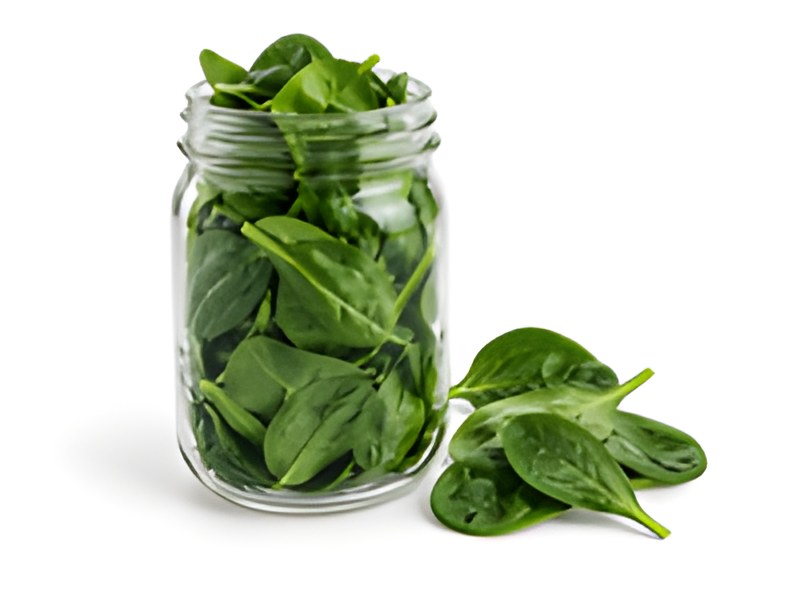
Spinach is one of the quickest leaf crops you can grow: baby leaf in deep-water culture is ready in a few weeks. It is also one of the fussier ones. Long, warm days push it to flower, and warm nutrient solution invites root rot. Here's a brief overview of the plant and what the hydroponic trials report.
What Spinach Is
University of Wisconsin's Master Gardener program describes spinach, Spinacia oleracea, as a hardy annual related to beets and Swiss chard, native to southwest Asia and grown in Persia more than 2,000 years ago (Mahr, UW Master Gardener). It comes in three leaf types. Savoy types have crinkly leaves and are preferred for home gardens and fresh market; smooth-leaved types grow faster, yield more and are grown mainly for freezing and canning; semi-savoy types sit in between (Mahr, UW Master Gardener). Oregon State lists flat, semisavoy and savoy leaf varieties for different markets (Oregon State University, Oregon Vegetables).
Nutritional Profile of Spinach
USDA's SR Legacy record for raw spinach (FDC 168462, via GetFoodFacts) lists, per 100 g, about 23 kcal, 91.4 g water, 2.9 g protein, 2.2 g fiber, 28.1 mg vitamin C, 483 µg vitamin K, 469 µg vitamin A (RAE), 194 µg folate, 79 mg magnesium, 558 mg potassium, 79 mg sodium, 99 mg calcium and 2.7 mg iron (GetFoodFacts, USDA FDC 168462). Nothing on this page is health or medical advice.
Hydroponics of Spinach
What the Research Shows
Baby spinach in deep-water culture. Cornell University engineers grew baby spinach in bench-scale deep-water tubs in Ithaca, New York, with aeration and a chiller. The solution was half-strength Sonneveld and Straver at EC 1,200-1,400 µS/cm (1.2-1.4 mS/cm) and pH 5.7-6.3, and the nutrient water was kept at about 19 °C, below 20 °C. The greenhouse ran 24 °C by day and 19 °C at night with no extra light. Plants spent 16 to 19 days in the tubs. In a side-by-side test, 'Carmel' (150 g per block) and 'Space' (146 g) gave about the same harvest, while 'Seaside' gave clearly less (94 g). Spreading seeds 1-2-1-2 across cells instead of 3-0-3-0 gave more seedlings but no significant change in harvest weight. Daylight in both runs was low (about 3 to 5.5 mol/m²/day), and the authors note about 17 mol/m²/day is the level cited as ideal for continuous production (Janeczko & Timmons, 2019).
Acidic solution, and how strength helps. University of Arizona researchers grew 'Corvair' spinach in deep-water culture in a growth chamber at pH 4.0, 4.5, 5.0 and 5.5. Shoot and root weight after 19 to 20 days dropped as pH fell; at pH 4.0 roots were badly stunted, and at 4.5 and 5.0 plants looked normal but were small. Raising the solution strength about three times (EC 3.4 dS/m instead of 1.4) at pH 4.5 grew significantly bigger plants than normal strength at that pH, though still smaller than the pH 5.5 control (Gillespie, Papio & Kubota, 2021).
Our reading: the trials here ran at EC about 1.2-1.4 and pH 5.5-6.3 with a cool solution. Unless you are deliberately running an acidic system, keep the pH in that band; below about 5 the plants shrink.
Root Rot and Solution Temperature
Spinach is a well-known Pythium crop in hydroponics. A Cornell article in Produce Grower names Pythium aphanidermatum as the cause of yellowing, stunted baby-leaf spinach, and sets a target root-zone temperature of 68 to 75 °F (20 to 24 °C): cooler water favors Pythium dissotocum and warmer water favors P. aphanidermatum. At Cornell, chilling ponds to about 68 °F reduced P. aphanidermatum but did not eliminate it. The article advises keeping dissolved oxygen above 6 ppm, ideally near saturation (about 8-9 ppm), avoiding excessively high fertility and root injury, sanitizing channels, tubing and tools between crops, scouting roots, and discarding infected plants at the first sign (Produce Grower, 2020). Infected roots look discolored and branch poorly, and in bad cases their outer layer sloughs off, leaving a thin "rat tail" (Produce Grower, 2020).
Temperature and Bolting
Wisconsin's guide calls spinach a cool-season crop with ideal weather of 50 to 60 °F; under warm temperatures and long days it bolts, and slow-bolting cultivars such as 'Indian Summer' and 'Olympia' suit summer crops (Mahr, UW Master Gardener). Oregon State gives 50-63 °F as ideal for growth, notes that long days and rising temperature predispose spinach to bolting, and adds that exposing young plants to low temperatures (40-60 °F) also increases bolting (Oregon State University, Oregon Vegetables). Indoors, that means a cool room and a photoperiod you control matter more for spinach than for most leafy greens.
Spacing
For field rows, Oregon State spaces rows 10-12 inches apart in sets, at about 6-8 plants per foot of row (Oregon State University, Oregon Vegetables). The Cornell baby-leaf trial instead sowed about 1.5 seeds per cell in 338-cell flats and grew the whole flat as one block (Janeczko & Timmons, 2019).
Harvest
Oregon State lists about 40-50 days to harvest for its varieties (Oregon State University, Oregon Vegetables); baby leaf in the Cornell tubs was cut after 16 to 19 days there (Janeczko & Timmons, 2019). Wisconsin's guide says you can pick individual leaves once plants have at least six true leaves, or cut the whole plant at maturity; taking only the outer leaves keeps the plant producing (Mahr, UW Master Gardener).
Pests
Wisconsin's guide lists aphids, spinach leafminer and slugs, plus rust, Cercospora leaf spot and anthracnose; remove leaves with leafminer eggs or mines, since sprays don't reach larvae inside the leaf (Mahr, UW Master Gardener). Oregon State notes damping off and lists downy mildew resistance as a variety trait to look for (Oregon State University, Oregon Vegetables).
Storage
Wisconsin's guide says fresh spinach keeps up to a week in the refrigerator (Mahr, UW Master Gardener). Oregon State holds it at 32 °F and 95-100% relative humidity, where it keeps only 10 to 14 days (Oregon State University, Oregon Vegetables).
References
- Gillespie, D. P., Papio, G., & Kubota, C. (2021). High Nutrient Concentrations of Hydroponic Solution Can Improve Growth and Nutrient Uptake of Spinach (Spinacia oleracea L.) Grown in Acidic Nutrient Solution. HortScience, 56(6), 687-694. DOI 10.21273/HORTSCI15777-21. Retrieved from https://experts.arizona.edu/en/publications/high-nutrient-concentrations-of-hydroponic-solution-can-improve-g/
- GetFoodFacts. Spinach, raw (USDA FoodData Central SR Legacy, FDC 168462). Retrieved from https://getfoodfacts.com/food/spinach-raw-168462
- Janeczko, D. B., & Timmons, M. B. (2019). Effects of Seeding Pattern and Cultivar on Productivity of Baby Spinach (Spinacia oleracea) Grown Hydroponically in Deep-Water Culture. Horticulturae, 5(1), 20. DOI 10.3390/horticulturae5010020. Retrieved from https://www.mdpi.com/2311-7524/5/1/20/html
- Mahr, S. (2012). Spinach, Spinacia oleracea. University of Wisconsin-Madison, Wisconsin Master Gardener Program. Retrieved from https://mastergardener.extension.wisc.edu/files/2015/12/spinach.pdf
- Oregon State University. Spinach (Spinacia oleracea). Oregon Vegetables, College of Agricultural Sciences. Retrieved from https://agsci.oregonstate.edu/oregon-vegetables/spinach-0
- Produce Grower (2020, March). Pythium root rot on hydroponically grown basil and spinach. Retrieved from https://www.producegrower.com/article/hydroponic-basil-spinach-pythium-root-rot
Keep reading

Growing Onions Hydroponically
In the scientific community, onion goes by the name of Allium cepa. Onion is more commonly known as a culinary and therapeutic spice in the kitchen when crushed into powdered form. The…

Growing Pepper Hydroponically
Pepper family is normally consumed as a spice. But, in some cultures, its fruit is used as whole foods. The family has well over 25 members, but this discussion is limited to…

Growing Celery Hydroponically
Celery belongs to the same family as one of the most common whole foods, carrots. From stalk to leaves, every part of celery is edible and often used as a spice for…