
Home / The Dirt / Hydroponic spices / Growing Star Anise Hydroponically
Growing Star Anise Hydroponically
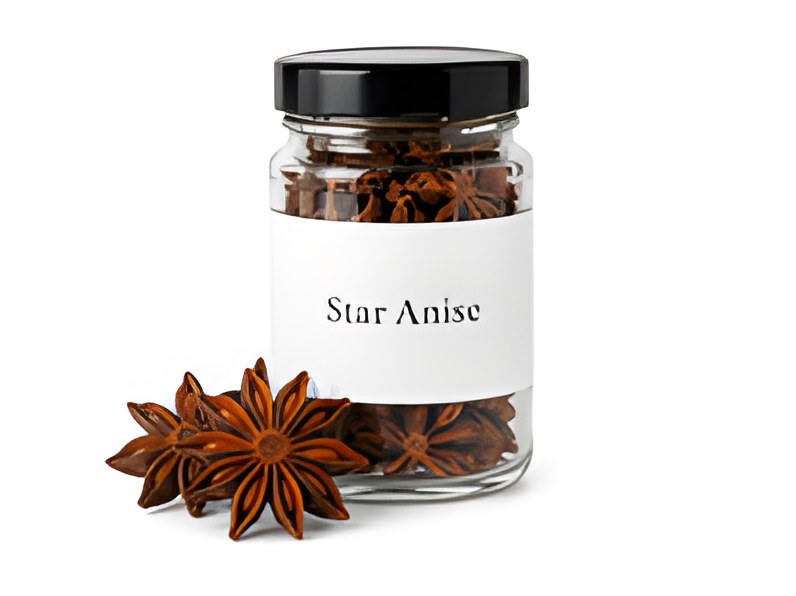
Star anise (Illicium verum), also called Chinese star anise, is the dried, star-shaped fruit of an evergreen tree. Here's a brief overview of the tree, the chemistry of its fruit, the toxic look-alike every cook should know about, and what it would take to grow one yourself.
What Star Anise Is
Star anise grows on an evergreen tree 8-15 m tall (sometimes 20 m) with white bark and leathery leaves about 5-15 cm long. Its small flowers, 1-1.5 cm across, range from white-pink to red or greenish-yellow. The spice is the fruit: usually 8 woody pods (follicles), each 1-2 cm long with one seed, "arranged around a central axis in the shape of a star" (PROSEA).
The tree is known only from cultivation. It probably originated in south-eastern China and northern Indo-China, and is also grown in Hainan, Taiwan and Japan (PROSEA).
Know the Look-Alike
Japanese star anise (Illicium anisatum) looks similar, and its fruit is poisonous (PROSEA). NC State Extension rates its poison severity "High," lists the seeds as the poisonous part, and notes that "all species and cultivars of Illicium, except for I. verum (Chinese Star Anise), have varying levels of toxicity." PROSEA says the Japanese fruit is smaller, often does not form a regular star, and has more pointed tips, and recommends using the scientific names, or "Chinese" and "Japanese" star anise, to keep them apart.
This is not a theoretical worry. In September 2003 the US FDA advised consumers to avoid herbal teas containing star anise after reports that at least 40 people, including 15 infants, became ill after drinking teas brewed with star anise fruit (NutraIngredients, 2003). Buy star anise as a food spice from a seller you trust, and never use fruit from an ornamental Illicium shrub.
Nutritional Profile of Star Anise
USDA FoodData Central has no separate record for star anise. A nutrition listing on ReciPal (its stated source is the now-retired nutritiondata.self.com) gives, per tablespoon (6 g): 22 calories, 1 g protein, 1 g fat, 3 g carbohydrate, 1 g fiber, 40 mg calcium and 2.3 mg iron. A recipe uses one or two stars, so the spice adds little to a day's food.
Nothing on this page is health or medical advice.
Chemistry of Star Anise
Steam distilling the fresh or partly dried fruit gives about 3-3.5% essential oil, held mainly in the fruit wall rather than the seed. That oil is 70-93% trans-anethole, the same licorice-flavored compound that dominates anise seed. The leaves and twigs carry 0.3-0.4% oil of a similar make-up (PROSEA).
Star anise is also an industrial crop. Shikimic acid "is a key intermediate for the synthesis of the antiviral drug oseltamivir (Tamiflu®)," and "much of the current supply of shikimic acid is sourced from the seeds of Chinese star anise (Illicium verum)" (Ghosh et al., 2012). The same review notes that this supply swings with the weather and that extracting it from the seeds is expensive. That is a fact about drug manufacturing, not a reason to eat or brew the spice.
Hydroponics of Star Anise
What the Research Shows
We found no hydroponic research on star anise, and the plant explains why: it is a forest tree, not a crop for a grow tray. Grown from seed, it flowers at about 6 years and gives a first harvest at 7-10 years, reaching full yield over the following decade (PROSEA).
The closest research is container work on its relatives. A University of Georgia study grew five other Illicium species (not I. verum) in pots at full sun or 45% light. All five generally photosynthesized best in the shade: two species lost 81-94% of their peak photosynthesis in full sun, one did not survive it, and "optimal growth and nutrient uptake occurred in the lowest light treatment." Extra nitrogen "did not promote growth" (Olsen, 2001). If star anise behaves like its relatives, a potted tree wants bright shade, not a strong grow light at close range. That is our inference; nobody has tested it.
Climate
Star anise is grown in the cooler tropics and subtropics up to 2000 m, with mean annual temperatures of 12-18°C, 1000-2000 mm of rain a year and soil around pH 5.8 (PROSEA). Trees and Shrubs Online lists it for USDA zones 9-10 and advises "a very warm site"; a 2 m tree in a sheltered spot at Tregrehan has "not been damaged by frost since planting in 2003." Most of the US is too cold to keep one outdoors year-round.
Starting Seeds
Star anise is grown from seed, and the seed loses viability quickly: PROSEA advises sowing within 3 days of harvest, after soaking for 6 hours in warm water (35-37°C). Dried supermarket stars will not sprout. Nursery seedlings are kept out of direct sun, moved on after 1-1.5 years, and planted out about 3 years later (PROSEA).
A Realistic Home Plan
For most home growers, star anise belongs in the spice rack, not the hydroponic system. If you want to try a tree anyway, start from a nursery plant of true Illicium verum (check the Latin name on the label), keep it in a large pot of acidic, free-draining mix in bright shade, and bring it indoors before frost. Expect years of leaves before any stars.
Harvest and Drying
Commercial growers pick the fruit before it is fully ripe, when its oil content peaks, and dry it in the sun for about 10 days. 100 kg of fresh fruit dries down to 25-30 kg. A mature tree of 13-25 years gives 5-10 kg of fresh fruit a year (PROSEA).
References
- Ghosh, S., Chisti, Y., & Banerjee, U. C. (2012). Production of shikimic acid. Biotechnology Advances. Retrieved from https://www.sigmaaldrich.com/AT/de/tech-docs/paper/281498
- NC State Extension. (n.d.). Illicium anisatum. North Carolina Extension Gardener Plant Toolbox. Retrieved from https://plants.ces.ncsu.edu/plants/illicium-anisatum
- NutraIngredients. (2003, September 11). FDA warning on star anise teas. Retrieved from https://www.nutraingredients.com/Article/2003/09/11/FDA-warning-on-star-anise-teas/
- Olsen, R. T. (2001). Effects of light intensity and nitrogen nutrition on growth and photoinhibition of container-grown Illicium L. taxa (Master's thesis). University of Georgia. Retrieved from https://openscholar.uga.edu/record/18570/files/olsen_richard_t_200112_ms.pdf
- PROSEA. (n.d.). Illicium verum. Plant Resources of South-East Asia. Retrieved from https://prosea.prota4u.org/view.aspx?id=577
- ReciPal. (n.d.). Star anise: nutrition facts. Retrieved from https://www.recipal.com/ingredients/22820-nutrition-facts-calories-protein-carbs-fat-star-anise
- Trees and Shrubs Online. (n.d.). Illicium verum. Retrieved from https://www.treesandshrubsonline.org/articles/illicium/illicium-verum/
Keep reading

Growing Chilli Hydroponically
Chilli is native to Latin America, particularly Mexico. Then came the age of exploration, and many cultivars of chilli spread across the globe. Now, chilli is a popular cooking ingredient to add…

Growing Nutmeg Hydroponically
Nutmeg’s walnut-like appearance is often deceiving. Unlike the dry fruit counterpart, nutmeg is a seed whose fruit is also a source of a couple more spices. Here’s a brief overview of nutmeg’s…

Growing Ginger Hydroponically
Ginger is much more than a culinary spice. For ages, its underground rhizome has been an integral part of eastern medicine. An overview of this folk remedy and one of the whole…