
Home / The Dirt / Hydroponic herbs / Growing Summer Savory Hydroponically
Growing Summer Savory Hydroponically
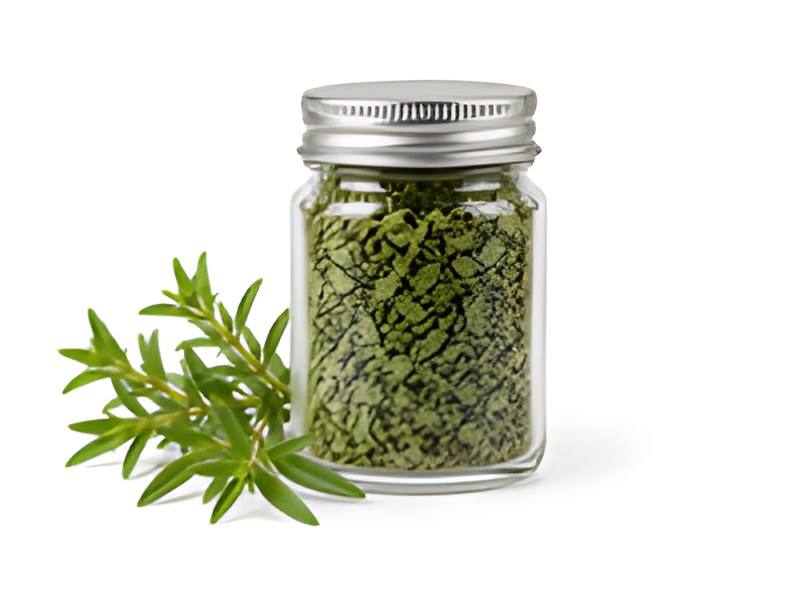
Summer savory (Satureja hortensis) is a small annual herb in the mint family, grown for its narrow, peppery leaves. It is the savory most cooks mean, especially for bean dishes. Here's a brief overview of the plant, what is in the dried herb, and how to grow it in a hydroponic setup.
What Summer Savory Is
Summer savory is an erect, much-branched annual 10-50 cm tall. Its leaves sit in opposite pairs, almost without stalks, and are narrow: 1-4 cm long and only 1-5 mm wide. Small light violet to white flowers form in whorls along the stems, and each flower leaves four tiny blackish-brown nutlets about 1 mm long (PROSEA). It is native to the eastern Mediterranean and is now grown in Europe, parts of Asia, South Africa and the Americas (PROSEA).
University of Illinois Extension describes it as a mounded plant about 12 inches tall, with fine purple-tinted stems and long, narrow grey-green leaves. It is considered to have a much better flavor than its perennial cousin, winter savory, and is the preferred culinary savory (Illinois Extension).
Nutritional Profile of Summer Savory
USDA FoodData Central lists ground savory (SR Legacy, FDC 170936). Per 100 g of the dried, ground herb it gives 272 kcal, 6.73 g protein, 5.91 g fat, 68.7 g carbohydrate and 45.7 g fiber, with 2,132 mg calcium, 37.9 mg iron, 377 mg magnesium, 1,051 mg potassium, 6.10 mg manganese, 257 µg vitamin A (RAE) and 50.0 mg vitamin C (USDA FDC via GetFoodFacts).
Keep the serving in mind: a recipe uses a teaspoon or so of dried savory, not 100 g, so these numbers describe the herb, not a day's food.
Nothing on this page is health or medical advice.
Chemistry of Summer Savory
The leaves and flowers hold 1-2% essential oil. In one Polish oil the main parts were γ-terpinene (40.9%) and carvacrol (39.3%), followed by p-cymene (6.2%), α-terpinene (4.0%) and myrcene (2.5%). Commercial savory oil must contain 20-57% carvacrol, with very little thymol (PROSEA). Carvacrol is the same sharp, peppery compound that gives oregano its bite.
The amount varies a lot from plant to plant. When German researchers grew 34 summer savory populations side by side, oil content ranged from 1.28% to 3.50% and carvacrol made up 54.2% to 88.3% of the oil (Pank, Pfefferkorn & Krüger). Seed source matters if you want a strong-flavored crop.
In the Kitchen
Summer savory is mainly a flavoring for beans and peas, and it also goes into baked goods, meats, sausages, soups and salads (PROSEA). Illinois Extension calls it especially good with bean dishes, and it can be used fresh or dried. A seed company suggests infusing vinegar with savory for green beans or three-bean salad (True Leaf Market).
Hydroponics of Summer Savory
What the Research Shows
There is very little published work on summer savory in hydroponics, and none we found gives a full nutrient recipe.
At the University of Tabriz in Iran, researchers grew summer savory in a hydroponic system with 0, 50 or 100 mM salt (NaCl) in the solution. Both salt levels cut plant height, fresh and dry weight, and essential oil content and yield; the authors conclude that summer savory is sensitive to salinity in hydroponics (Emaratpardaz, Hami & Ghohari, 2016). For a home system, that means changing the solution before salts build up.
A 2024 greenhouse study grew summer savory both hydroponically and in soil and sprayed the leaves with zinc, copper, manganese or lanthanum. In the hydroponic plants, copper, zinc and manganese sprays improved the measured growth traits; lanthanum did not (Salehi-Arjmand, Khadivi & Bagheri, 2024).
Feeding
Soil trials point to a moderate feed. PROSEA notes that potassium is particularly important and that too much fertilizer makes plants flop over. In a two-year Hungarian field trial with five fertilizer levels, yield did not differ significantly between levels, and carvacrol fell as the nutrient level rose (Lelesz & Csajbók, 2018). In a hydroponic setup, a general herb solution at modest strength is a sensible start; pushing the feed is unlikely to improve the flavor.
Light
Summer savory wants full sun (Illinois Extension; PROSEA). Indoors, give it a bright spot or a strong grow light; Illinois Extension notes it grows easily in containers indoors in a sunny location.
Starting a Plant
Summer savory grows from seed, and the seed needs light: sow it shallow (Illinois Extension), barely covered at about 1/16 inch, and expect sprouts in about 2 weeks (True Leaf Market). Indoor transplants take about 4-6 weeks to develop (Illinois Extension). PROSEA thins field plants at the 4-6 leaf stage, to about 15 cm apart in the US. Savory seed stays viable for only 1-2 years (PROSEA), so buy fresh seed.
Harvest
Start picking once plants are at least 6 inches tall (True Leaf Market), and pinch the tips to keep plants branching. For drying, cut the leafy tops when buds start to show (Illinois Extension); oil content rises toward full flowering (PROSEA). In the German collection, plants took 29-51 days from planting to flowering (Pank, Pfefferkorn & Krüger). Because it is a short-lived annual, Illinois Extension suggests sowing again every 3-4 weeks for a steady supply.
Pests and Diseases
PROSEA lists mint rust, damping-off, downy mildew and grey mould (Botrytis), plus leaf miners, caterpillars, aphids and leafhoppers. In a hydroponic system, good airflow and clean seedling trays help with the fungal problems.
References
- Emaratpardaz, J., Hami, A., & Ghohari, G. (2016). Evaluation of growth characteristics and essential oil yield of Satureja hortensis L. under salinity and Zn foliar spraying. Journal of Agricultural Science and Sustainable Production. Retrieved from https://sustainagriculture.tabrizu.ac.ir/article_5352.html?lang=en
- GetFoodFacts. (n.d.). Spices, savory, ground (USDA FoodData Central SR Legacy, FDC 170936). Retrieved from https://getfoodfacts.com/food/spices-savory-ground-170936
- Huyen, D. D., & Brink, M. (n.d.). Satureja hortensis (PROSEA). Pl@ntUse. Retrieved from https://uses.plantnet-project.org/en/Satureja_hortensis_%28PROSEA%29
- Lelesz, J. É., & Csajbók, J. (2018). Analysis of different fertilization settings' effect in the case of the summer savory's (Satureja hortensis L.) yield and active agents. Acta Agraria Debreceniensis, 74, 101-105. Retrieved from https://ojs.lib.unideb.hu/actaagrar/article/download/1672/2301/4035
- Pank, F., Pfefferkorn, A., & Krüger, H. (n.d.). Evaluation of a summer savory (Satureja hortensis L.) collection with regard to morphology, precocity, yield components and essential oil and carvacrol content. Federal Centre for Breeding Research on Cultivated Plants. Retrieved from https://www.openagrar.de/receive/openagrar_mods_00061384
- Salehi-Arjmand, H., Khadivi, A., & Bagheri, V. (2024). The effect of foliar spraying of some micronutrients and lanthanum on the morphological and physiological characteristics of summer savory (Satureja hortensis L.) under hydroponic and soil conditions. BMC Plant Biology, 24. https://doi.org/10.1186/s12870-024-05696-z
- True Leaf Market. (n.d.). Summer savory herb growing guide. Retrieved from https://trueleafmarket.com/pages/summer-savory-herb-growing-guide
- University of Illinois Extension. (n.d.). Savory: Summer. Herb Gardening. Retrieved from https://extension.illinois.edu/herbs/savory-summer
Keep reading

Growing Basil Hydroponically
Basil is essentially a herb. But it’s frequently used as a spice in kitchens because of its aroma and peppery taste. Basil is an essential ingredient in Italian and Indian culinary preparations…

Growing Parsley Hydroponically
Native to the eastern Mediterranean region, parsley is now widely used in European and American cuisine. Its leaves are either utilized fresh or dried to form spice. Sometimes, it’s partnered up with…

Growing Thyme Hydroponically
Thyme is a perennial herb that’s rich in nutrition as well as taste. And both these qualities are responsible for their culinary and medicinal uses. Here’s a brief overview of their chemistry…